

Handling Your Art, with Care
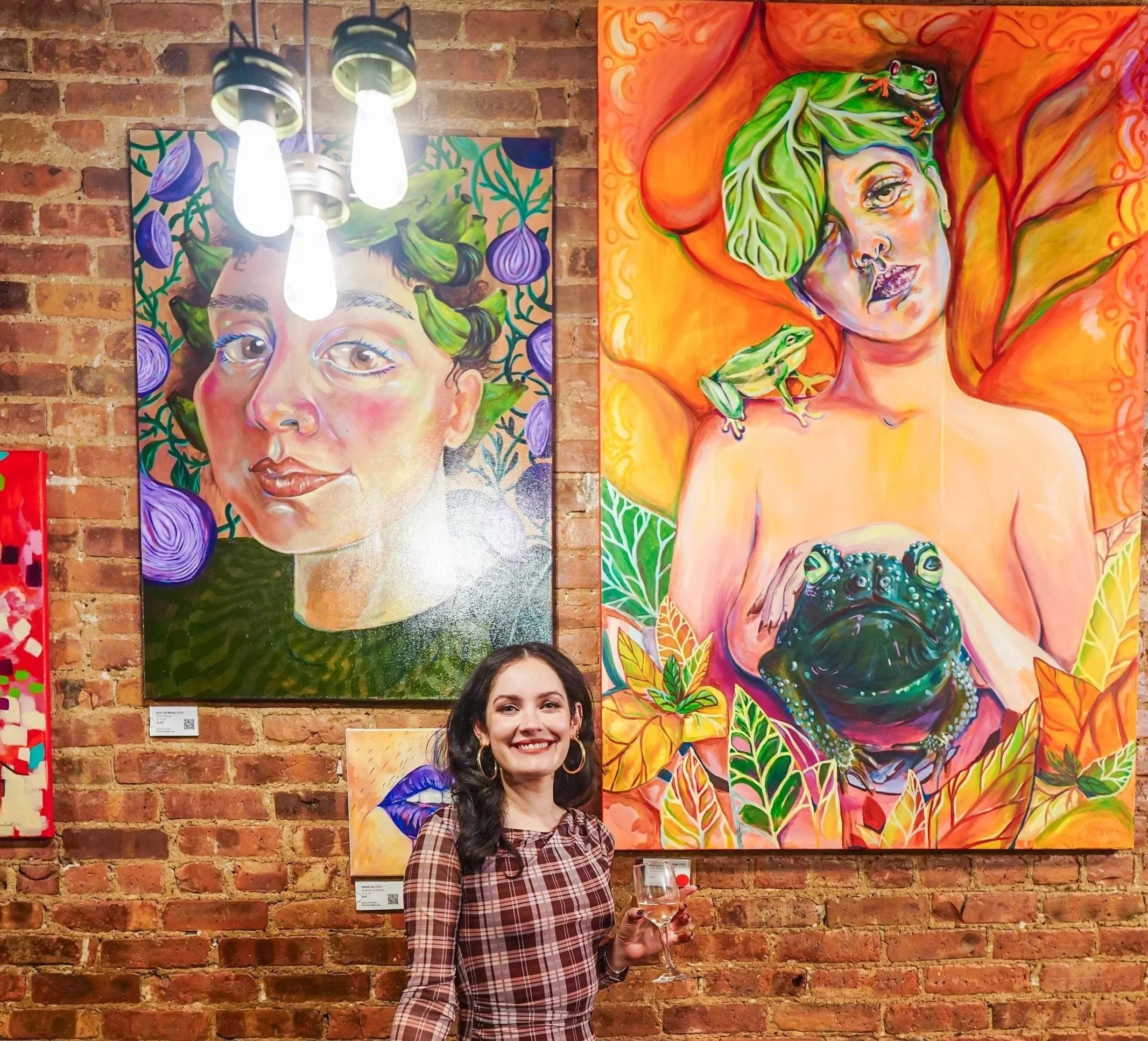
Care Instructions for Your Artwork
Original art is both an investment and something meant to be enjoyed for generations. With proper care, your piece can remain vibrant and beautiful for decades to come.
Most paintings are created on cotton canvas stretched over a wooden frame. The canvas is prepared with one or more ground layers before paint is applied. Both the canvas and paint are sensitive to environment, handling, and light.
Acrylic Paintings
Temperature & Environment
Ideal temperature: 65–75°F (18–24°C)
Avoid extreme heat or cold, which can cause the paint film to become brittle or crack over time.
Avoid rapid temperature changes.
Lighting
Best lighting: indirect natural light, recessed lighting, or halogen lighting (non-UV)
Avoid prolonged exposure to direct sunlight or ultraviolet light, which can fade pigments over time.
Storage
Never store in attics, garages, or basements as temperatures are typically not ideal.
Keep away from radiators, and heaters
If stacking:
Use acid-free glassine or silicone-release paper between paintings
Store upright if possible, with spacers so surfaces never touch
Cleaning & Dusting
Do not use liquids, including water or chemicals such as detergents, vinegar, ammonia, or solvents.
Gently remove surface dust using:
A dry microfiber cloth
Compressed air
A soft artist’s brush (such as a sable brush) for delicate areas
If the paint surface is damaged or flaking, avoid cleaning and consult a professional
Oil Paintings
Temperature & Humidity
Ideal temperature: 60–75°F (16–24°C)
Ideal humidity: 40–55%
High humidity: mold growth, slack canvas
Low humidity: embrittlement and cracking
Avoid sudden environmental changes.
Lighting
Best lighting: indirect natural light, recessed lighting, or halogen lighting (non-UV)
Avoid prolonged exposure to direct sunlight or ultraviolet light, which can fade pigments over time.
Storage
Never store in attics, garages, or basements as temperatures are typically not ideal.
Keep away from radiators, and heaters
If stacking:
Use acid-free glassine or silicone-release paper between paintings
Store upright if possible, with spacers so surfaces never touch
Cleaning & Dusting
Remove dust with a clean, soft brush.
For light surface dirt:
Use a slightly damp, soft cloth
Immediately follow with a dry, clean cloth
Never use chemicals such as detergents, vinegar, ammonia, or solvents.
Canvas Care & Handling
Stretcher bars may warp if all four corners are not supported evenly against a flat wall.
Do not press or rest objects against the canvas surface, as this can cause dents or punctures.
Minor dents can sometimes be reduced by lightly misting the back (unpainted side) of the canvas with water to allow the fibers to contract.
Results depend on severity.
If unsure, consult a professional conservator or framer.
Care for Giclée Prints
Giclée fine art prints are prized for their longevity and their ability to faithfully reproduce color and detail, which is why they are widely used by museums and collectors. They should be treated with the same care as original artwork.
Handling
Always handle with clean, dry hands.
Avoid touching the printed surface.
Protection
Keep away from direct sunlight, moisture, heat, oils, solvents, and dust.
Avoid anything that could scratch, dent, bend, or crease the paper—damage may be permanent.
Cleaning
Use a dry, clean, white, lint-free cloth to gently remove dust.
Never wipe with bare hands or use liquids.
Framing your print is highly recommended to ensure longevity
✨ Thank you for being a collector and for supporting independent art!
Your care helps ensure each piece can be enjoyed for generations to come.
If you have any additional questions regarding care, framing, or display, please fill out the contact form below. I’m always happy to help!